
Power Apps for Business: When Low-Code Is the Right Choice
Microsoft 365 | Power Apps | Power Platform

Power Apps is often positioned as a simple solution to complex problems: “Anyone can build apps, no developers required.”
That promise is partly true — and partly misleading.
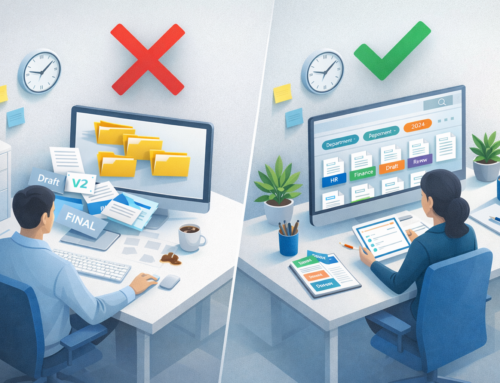
When used intentionally, Power Apps can unlock enormous productivity gains and enable businesses to move faster than traditional development ever allowed. When used without structure or governance, it can just as quickly create fragile solutions that are difficult to support, extend, or secure.
The real question is not whether Power Apps is powerful, but when it is the right tool for the job.
Power Apps Is Designed For
At its core, Power Apps is a business application platform, not a general-purpose software development framework. It is designed to sit close to the business, enabling rapid solution delivery for processes that are already well understood but poorly supported by existing tools.
This typically includes scenarios where requirements are known, change frequently, or need to be validated quickly with users. Power Apps integrates deeply with Microsoft 365, making it especially effective when data already lives in SharePoint, Dataverse, Teams, or other Microsoft services.
Used in this context, Power Apps reduces reliance on spreadsheets, emails, and manual hand-offs — replacing them with structured, auditable workflows.
Where Power Apps Delivers the Most Value
One of the strongest use cases for Power Apps is process enablement. Many organisations rely on informal tools for everyday business processes such as onboarding, approvals, issue tracking, and internal requests. These processes rarely justify a full custom application, yet they are critical to operational efficiency.
Power Apps provides a way to digitise these workflows quickly while still enforcing validation, role-based access, and consistent data capture. It also allows businesses to iterate — adjusting the app as processes evolve rather than freezing requirements upfront.
Another area where Power Apps performs well is as a front-end layer over existing data. When SharePoint lists or Dataverse tables become difficult for end users to interact with directly, Power Apps can provide a tailored interface that simplifies data entry, reduces errors, and improves overall usability. This is particularly effective when different user roles require different views of the same data.
Power Apps also excels in rapid prototyping. Instead of spending months designing and building a solution only to discover it does not meet user needs, organisations can validate ideas early, gather feedback, and refine solutions before committing to larger investments.
Where Power Apps Is the Wrong Tool
Despite its strengths, Power Apps is not suitable for every scenario. Problems arise when it is treated as a replacement for traditional development in situations where it was never intended to compete.
Applications that require highly complex business logic, deep transactional processing, or extensive custom integrations can quickly become difficult to maintain in Power Apps. While it is possible to build sophisticated solutions, complexity tends to spread across screens, formulas, and flows, making the app harder to understand and support over time.
Performance can also become a constraint when apps are expected to handle very large datasets or high concurrency. Dataverse improves scalability, but it does not remove the need for careful data modelling and architecture.
Most critically, Power Apps struggles when deployed without governance. The platform makes it easy to build something that works today, but without ownership, documentation, and lifecycle management, these apps often become business-critical liabilities.
The Hidden Risk: Low-Code Technical Debt
Low-code does not mean low-risk.
One of the most common challenges we encounter is technical debt introduced through rushed or unstructured app development. Logic scattered across screens, hard-coded values, inconsistent naming, and undocumented dependencies all contribute to solutions that are fragile and difficult to evolve.
These issues often surface months later, when the original author has moved on or the app needs to be extended. At that point, what started as a “quick win” can require a complete rebuild.
The irony is that many of these problems are avoidable with relatively simple discipline.
Best Practices That Make Power Apps Sustainable
Successful Power Apps solutions are rarely accidental. They are the result of deliberate design decisions, even if the solution itself is simple.
Spending time upfront to understand the process, define ownership, and model the data pays dividends later. Treating apps as products — with a purpose, lifecycle, and support model — helps prevent uncontrolled growth.
Separating environments for development, testing, and production is essential for stability, especially as solutions mature. Centralising business logic where possible and avoiding excessive screen-level complexity also makes apps easier to maintain and scale.
These practices do not slow delivery. In fact, they enable teams to move faster over time by reducing rework and instability.
Final Thought
Power Apps is not a shortcut around good design — it is a force multiplier.
It amplifies clarity, governance, and intent just as effectively as it amplifies poor structure and rushed decisions. When applied to the right problems, it enables organisations to deliver value faster than traditional development approaches ever could.
The key is knowing when to use it — and when not to.